




Traditional Driving Training or a Driving Simulator? A Comparison from the Perspectives of Learning, Cognitive Processes, and Safety
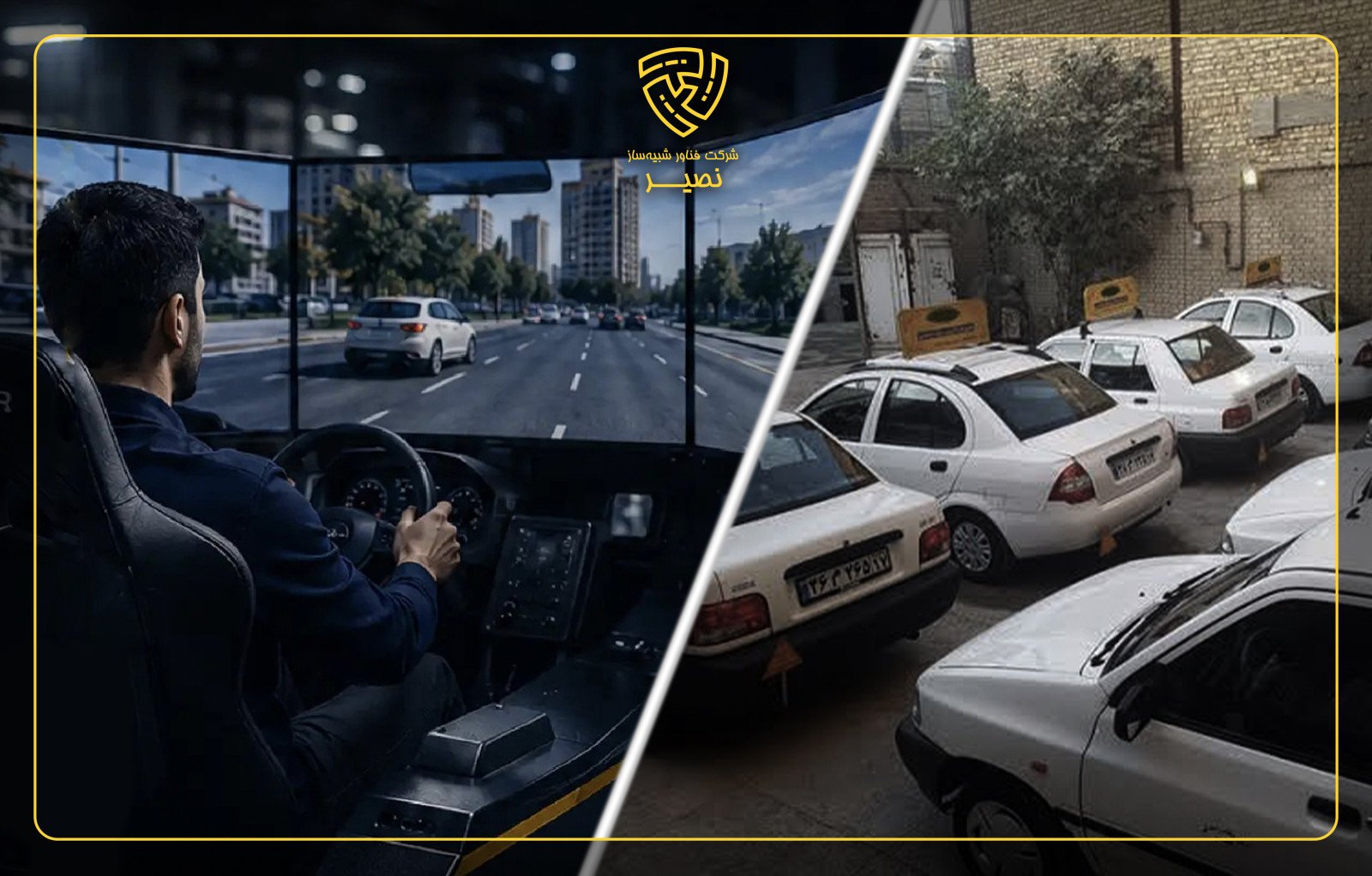





Driving Simulator Training: A Modern Approach to Improving Skills and Hazard Perception
Is traditional driver training still sufficient for today's needs?
The growing number of vehicles and increasing traffic on streets and roads have made the importance of proper driver education more evident than ever. Road safety and vehicle quality undoubtedly play important roles in reducing accidents, but the human factor remains one of the most critical components of the transportation system.
In addition to being able to control a vehicle, a driver must be able to assess the surrounding environment accurately, anticipate potential hazards, and make appropriate decisions within a short period of time. For this reason, driver training cannot be limited to learning how to move a vehicle, change gears, parallel park, or follow traffic signs.
One important question is whether conventional driver training methods can effectively transfer all of these skills to learners.
To answer this question, it is necessary to consider not only the method of instruction, but also the learner's cognitive characteristics, level of stress, opportunities for practice, ability to experience challenging situations, and the way feedback is provided.
Traditional Driver Training: Essential but Limited
The fundamental structure of practical driver training has not changed significantly over the years. After receiving initial instruction, the learner enters the real traffic environment relatively quickly and must perform multiple tasks simultaneously—from controlling the steering wheel and pedals to monitoring surrounding vehicles, traffic signs, pedestrians, and the instructor's directions.
This method is essential for gaining real-world experience, but it also has limitations.
In traditional training, practice conditions depend heavily on the environment, time, traffic conditions, and the instructor's skills. It is also not always possible to recreate a specific situation accurately. For example, a hazardous traffic scenario cannot easily be reproduced repeatedly under identical conditions so that the learner can practice the correct response.
Practicing situations such as emergency braking, sudden reductions in visibility, driving in adverse weather conditions, an unexpected vehicle entering the driver's path, or unsafe behavior by other drivers also presents safety limitations in the real world.
Furthermore, making a serious mistake in a real environment can have consequences. As a result, instructors may need to exclude or significantly limit some difficult and high-risk situations from the training program.
Beginner Driver Stress and the Role of Cognitive Load in Learning
One of the most important factors in driver training is mental workload, or cognitive load.
A beginner has not yet developed many driving behaviors to the point where they become automatic. For an experienced driver, controlling the steering wheel, adjusting speed, or checking mirrors may be almost automatic. However, a novice driver requires significant attention and concentration to perform each of these tasks.
When that same learner enters a busy street, they must simultaneously:
- Control the vehicle;
- Observe traffic signs;
- Maintain an appropriate distance from other vehicles;
- Monitor pedestrians;
- Check the mirrors;
- Listen to the instructor's directions; and
- Remain prepared for unexpected events.
Excessive cognitive load can reduce the quality of both learning and decision-making.
For this reason, one of the most effective principles in teaching complex skills is to progress gradually from simple, controlled environments to more complex real-world situations.
This is where a driving simulator can play an important role as a complementary training tool.
A New Generation and Changing Learning Patterns
A significant number of today's young learners have grown up in an environment where digital technologies, computer games, smartphones, and interactive content have been an integral part of everyday life.
As a result, interactive and experience-based learning methods can create new opportunities when used alongside traditional training.
This does not mean that traditional education is ineffective, nor does it suggest that one generation has greater or lesser cognitive ability than another. The key issue is the diversity of learning methods and the use of appropriate tools to create a more effective learning experience.
Simulated environments can provide opportunities for trial and error, feedback, and repeated practice—three important elements in the process of learning and developing skills.
What Is a Driving Simulator?
A driving simulator is a system designed to recreate driving conditions within a controlled, simulated environment.
Using equipment such as a steering wheel, pedals, displays, and other control components, the user can experience aspects of real driving in a safe and controlled setting.
Depending on the type and technological capabilities of the simulator, different environments and conditions can be simulated, including roads, urban streets, nighttime driving, various weather conditions, traffic situations, and certain hazardous scenarios.
The primary purpose of a simulator is not to eliminate real-world driving. Instead, this technology can provide a safe and controlled environment for training, practice, and the assessment of driving skills.
Benefits of Using a Driving Simulator in Driver Training
One of the most important advantages of a simulator is the ability to practice without exposing the learner or others to real-world risks.
In this environment, the learner can make a mistake, observe its consequences, and then practice the same situation again.
Some of the key educational capabilities of a driving simulator include:
1. Repeating Specific Scenarios
On a real street, it is almost impossible to recreate the same traffic situation multiple times under exactly the same conditions.
In a simulator, a scenario can be repeated as many times as needed, while the learner's performance can be evaluated at each stage.
2. Practicing Challenging Situations in a Safe Environment
Some driving conditions are not suitable for direct training in the real world.
A simulator can provide controlled exposure to certain challenging or unexpected scenarios without allowing mistakes to result in real accidents.
3. Reducing Initial Pressure on Learners
Initial familiarization with vehicle controls in a simulated environment can give learners the opportunity to practice basic skills before entering real traffic.
As a result, when they begin driving in a real environment, not every aspect of the driving experience will be completely unfamiliar.
4. Providing Feedback
Feedback is an essential component of learning.
In a suitable simulation system, driver performance can be evaluated based on factors such as speed, reaction time, following distance, braking behavior, and responses to hazards.
This information can help instructors identify a learner's weaknesses more accurately and adapt future training sessions accordingly.
Hazard Perception: A Skill Beyond Vehicle Control
One of the most important skills that should be addressed in driver training is hazard perception.
Hazard perception does not simply mean noticing an obvious danger. A skilled driver must be able to recognize signs that may develop into a hazardous situation within the next few seconds.
For example, a driver must monitor the behavior of other vehicles, road conditions, pedestrians, and environmental changes, and select an appropriate response before a critical situation develops.
This process is related to several cognitive abilities:
Attention: The driver must identify important information among a large number of environmental stimuli.
Situational awareness: The driver must understand what is happening around the vehicle at any given moment.
Anticipation: Based on available information, the driver must be able to predict what may happen in the next few moments.
Decision-making: After identifying a potential hazard, the driver must quickly choose an appropriate action, such as reducing speed, increasing following distance, or changing direction.
Therefore, a safe driver is not simply someone who can control a vehicle well. A safe driver must also be able to identify potential hazards before they develop into accidents.
The Role of Driving Simulators in Improving Hazard Perception
One of the important applications of driving simulators is providing opportunities to practice scenarios related to hazard perception.
In a simulated environment, learners can be exposed to different scenarios and their performance can be assessed based on questions such as:
- Do they identify the hazard in time?
- When do they reduce their speed?
- Which areas of the environment do they pay attention to?
- Under what conditions do they make incorrect decisions?
- How does their performance change after receiving feedback?
The key advantage of this approach is repeatability.
A learner can experience the same situation multiple times and gradually develop more effective patterns of observation, anticipation, and response.
In fact, the goal is not simply to teach faster reactions, but to develop better observation and more preventive decision-making.
Can a Driving Simulator Replace Real-World Driver Training?
No.
A driving simulator should be considered not as a replacement for real-world driving, but as a complementary training tool and an educational preparation stage.
Real-world driving involves factors that cannot always be fully recreated in a simulated environment. The actual sensation of vehicle movement, complex interactions with other drivers, constantly changing road conditions, and many environmental details can only be fully experienced through real-world driving.
Therefore, the most effective approach can be a combination of simulator-based training and practical instruction in a real vehicle.
A Proposed Model for Simulator-Based Driver Training
To use a simulator effectively, driver training can be divided into several stages.
Stage 1: Initial Familiarization and Training with the Simulator
Before entering the real driving environment, the learner becomes familiar with the basic principles of vehicle control and can practice fundamental skills without worrying about the consequences of making mistakes.
The goal of this stage is to reduce the initial complexity of training and help prepare the learner mentally.
Stage 2: Practicing Hazard Perception and Diverse Scenarios
After learning basic skills, more complex scenarios can be introduced.
This stage can focus on practicing different driving conditions, identifying hazards, managing speed, making decisions, and choosing appropriate responses.
Stage 3: Gradual Transition to Real-World Driving
After developing an initial level of readiness, the learner enters the real driving environment under the supervision of an instructor.
At this stage, simulated experience should be combined with real-world conditions to help develop practical driving skills.
Stage 4: Assessment and Additional Practice
The simulator can also be used after real-world driving sessions.
An instructor can identify weaknesses observed during the learner's practical driving and then use simulation scenarios designed specifically to address those weaknesses.
This process can help move driver training away from a completely identical program for every learner and toward a more targeted approach tailored to individual needs.
Driving Simulators: A Bridge Between Training and Real-World Experience
Effective driver training is not simply about increasing the number of training sessions. The quality of the learning experience, the amount of practice, opportunities for feedback, and the learner's cognitive readiness are also highly important.
A driving simulator can provide an environment in which learners experience different situations in a controlled setting before encountering them in the real world.
For driving schools, the purposeful use of simulators can also create opportunities to standardize parts of the training process, design a variety of scenarios, assess learner performance more effectively, and focus practice on specific weaknesses.
Most importantly, simulation technology can change the way we think about driver training—from an approach focused primarily on vehicle control to one that also addresses attention, anticipation, decision-making, hazard perception, and safe driving behavior.
Conclusion
Driving is not a simple motor skill. It is a complex combination of motor, perceptual, and cognitive abilities.
A driver must be able to observe the environment, identify relevant information, anticipate potential hazards, and make appropriate decisions at the right time.
Traditional driver training is essential for gaining real-world experience, but it has limitations, including the difficulty of practicing high-risk situations, limited opportunities to repeat specific scenarios, and the high cognitive load experienced by novice drivers.
As a complement to practical training, a driving simulator can help reduce some of these limitations by providing an appropriate environment for practice, trial and error, feedback, and the development of hazard perception skills.
The goal is not to eliminate real-world driving. The goal is to ensure that learners enter the real driving environment better prepared to learn and respond to a wide range of situations.
If we view driver training not merely as a process of obtaining a driving license, but as part of developing safe driving behavior, then the use of educational technologies such as driving simulators can represent an important step toward the advancement of modern driver education.
Consultation and Introduction to Our Driving Simulator Solutions
If you are interested in using driving simulators for driver training, skill assessment, or the development of educational programs, our specialists are ready to review your organization's needs and provide the most suitable solution.
Contact us to learn more and receive professional consultation about our driving simulator solutions.