




Reducing Accidents and Enhancing Safety
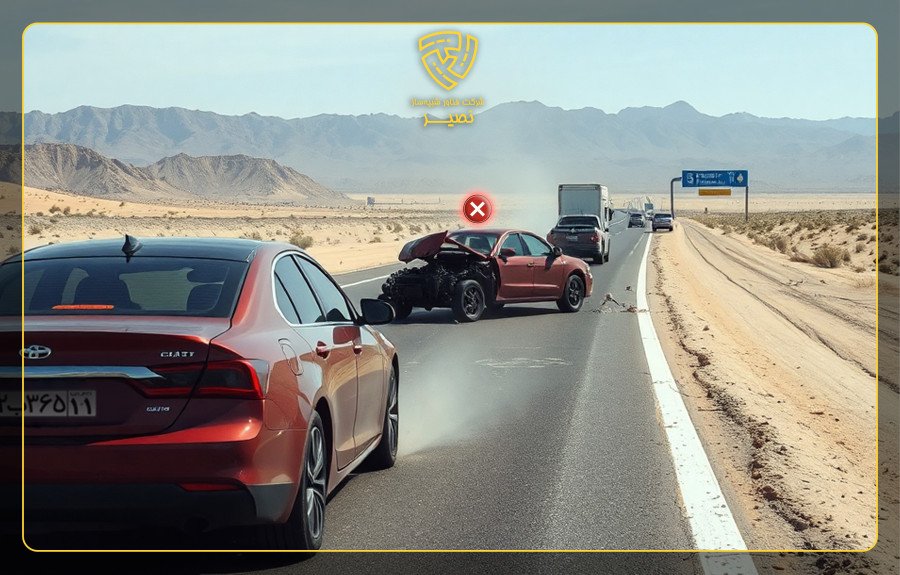





How Can Emerging Technologies Help Us Reduce Accidents and Improve Safety?
The purpose of this article is to share practical experiences and introduce new tools aimed at improving safety and productivity in Iran’s mining and mineral industries. It analytically examines the opportunities and challenges of implementing the Vision Zero approach in industrial environments. With a special focus on preventive culture, this article addresses how modern technologies can be applied to enhance safety and reduce accidents, as outlined below:
The role of training simulators in education and professional competency development of operators
Examining the use of Virtual Reality (VR) technology for training safety principles and preventive processes in mining environments
The importance of AI-based behavior monitoring systems in supervising the performance of mining machinery operators
In this article, first, driving simulator systems are introduced as effective training tools that enable the simulation of various driving conditions and prepare drivers to face real-world challenges.
Next, the impact of virtual reality systems on training safety principles and practical driving skills is examined, as these systems can provide an immersive and risk-free learning experience for drivers.
Finally, AI-based behavior monitoring systems are analyzed as efficient tools for supervising driver behavior and predicting potential risks, which can lead to accident reduction and improved driver performance.
The main objective of this article is to demonstrate how modern technologies can enhance road safety through improved training and evaluation processes, ultimately creating better conditions for drivers and society as a whole.
Training Simulators in Education and Professional Competency Development of Operators
Driving simulator systems offer numerous advantages for employers in mining, petrochemical, and oil industries by increasing safety, reducing costs, and improving productivity.
Key Benefits Include:
1) Increasing Safety and Reducing Occupational Accidents
Training drivers in high-risk conditions without human or financial risk:
Simulators allow training in hazardous scenarios (such as explosions, chemical leaks, driving on steep slopes, and uneven terrain) without real danger.
Identifying and correcting driver errors:
Data analysis systems detect driving mistakes and help correct them before accidents occur.
Enhancing driver responsiveness in emergencies:
Simulators strengthen rapid decision-making skills in critical situations.
2) Reducing Operational and Equipment Maintenance Costs
Reduced wear and tear on real machinery:
Using simulators instead of actual equipment lowers fuel consumption, tire wear, and mechanical damage.
Lower costs from accidents and human error:
Preventing financial losses from incidents is one of the major benefits of this technology.
Fuel consumption optimization:
Simulators can train operators in fuel-efficient driving, reducing energy costs.
3) Increasing Workforce Productivity and Skill Development
Faster and more effective driver training:
New workers can acquire essential skills in a shorter time without using real machinery.
Accurate performance evaluation:
Simulator monitoring systems analyze operator performance and identify weaknesses.
Personalized training programs:
Targeted training plans are designed based on each driver’s specific needs.
4) Compliance with Safety and Environmental Standards
Reduction of environmental pollution:
Lower use of real machinery decreases fossil fuel consumption and greenhouse gas emissions.
Greater alignment with international safety standards:
Employers can train staff in compliance with OSHA, ISO, and HSE standards.
5) Optimization of Recruitment and Promotion Processes
Pre-employment skill assessment:
Employers can evaluate drivers in various scenarios and select the most qualified candidates.
Driver ranking and incentive systems:
High-performing drivers can earn higher scores, increasing motivation and productivity.
Conclusion:
Using driving simulators in mining, petrochemical, and oil industries not only reduces costs and enhances safety, but also improves productivity, preserves natural resources, and optimizes human capital. This technology enables employers to elevate their training processes and minimize costly accidents.
The Importance of Virtual Reality (VR) Technology in Training and Industry
Virtual Reality (VR) is one of the major transformations in training, industrial safety, and workforce performance optimization. This technology allows users to acquire skills in a simulated and safe environment without high risks or costs.
Benefits of VR Technology in High-Risk Industries (Mining, Oil, and Petrochemicals)
1) Increasing Safety and Reducing Workplace Accidents
Simulating hazardous situations such as gas leaks, explosions, mining operations, and working at heights without real danger
Training emergency responses in critical situations such as fires or structural collapse
Reducing human injuries through practice in controlled environments
2) Reducing Training Costs and Equipment Wear
Reduced wear on real machinery used during training
Lower operational costs such as fuel consumption and maintenance
Faster training processes and reduced need for expensive physical equipment
3) Improving Training Quality and Practical Skill Learning
Creating interactive and realistic learning environments that enhance comprehension
Providing immediate and accurate feedback to trainees
Customizing training programs based on individual skill levels and needs
Applications of VR Technology Across Industries
1) Mining Industry and Heavy Machinery
Training operators of dump trucks, excavators, and bulldozers
Simulating driving in hazardous environments such as deep tunnels and open-pit mines
Performance evaluation and workflow optimization
2) Oil and Petrochemical Industry
Training personnel to manage emergencies such as gas leaks, explosions, and fires
Safe training in toxic and hazardous environments without exposure to chemicals
Simulation of complex refinery processes for performance optimization
3) Driving and Transportation Training
Training drivers of heavy vehicles, metros, and industrial transport systems
Creating driving scenarios in harsh weather and challenging routes
Monitoring and correcting driver behavior using artificial intelligence
The Future of VR Technology in Industry
Integration of VR with artificial intelligence for intelligent, performance-based training
Development of multi-user simulators for teamwork training in emergency scenarios
Use of Mixed Reality (MR) to combine real and virtual environments in industrial settings
Conclusion:
Virtual Reality technology has revolutionized training and industrial safety. By enhancing safety, reducing costs, and improving workforce productivity, VR has become an essential tool in mining, oil, petrochemical, and transportation industries.
The Importance of AI-Based Behavior Monitoring Systems in Supervising Mining Machinery Operators
1) Existing Challenges in Operator Performance
Human error: A large percentage of mining accidents are caused by lack of focus, fatigue, risky behavior, and poor decision-making.
Lack of real-time monitoring: Traditional evaluation methods are usually applied after accidents or productivity losses occur.
High costs and safety risks: Operational errors can lead to injuries, financial losses, and production downtime.
2) The Role of AI-Based Behavior Monitoring Systems
Real-time behavior monitoring:
Using computer vision, sensors, and machine learning algorithms, these systems analyze operator performance in real time and issue alerts when risky behavior is detected.
Assessing alertness and fatigue levels:
By analyzing facial patterns, eye movements, and control behavior, fatigue and error risks can be predicted and addressed.
Accident reduction and safety enhancement:
Real-time alerts and analytical reports enable management to take corrective actions before incidents occur.
3) Benefits of Using Behavior Monitoring Systems in Mines
Increased workplace safety by preventing accidents and reducing risky behaviors
Reduced costs associated with accidents and machinery repairs
Improved operator productivity through continuous feedback and corrective training
Creation of performance databases for individual and group evaluation
Conclusion:
The use of AI-based behavior monitoring systems in mining not only improves safety and productivity but also enables data-driven decision-making for workforce performance enhancement and operational cost reduction. This technology can be a critical step toward achieving Vision Zero goals and minimizing mining-related accidents.