




Development of a Professional Driving Simulator Platform in Iran: A Knowledge-Based National Achievement





Development of a Professional Driving Simulator Platform in Iran: A Novel Knowledge-Based Achievement
According to the Public Relations Office of the Road Maintenance and Transportation Organization, the Deputy Minister of Roads and Urban Development and Head of this organization stated that professional driving simulator platforms are among the most advanced and complex technologies in developed countries. He emphasized that the Islamic Republic of Iran, through the support of domestic experts, the Road Maintenance and Transportation Organization, and with the participation of the Vice Presidency for Science, Technology, and Knowledge-Based Economy, has successfully acquired this technology and continues to develop and advance it steadily.
Dariush Amani added that the use of driving simulators to enhance drivers’ skills and to assess competencies at entry and during in-service training plays a highly effective role in improving the quality of targeted education. Simulating diverse driving situations enables training in complex scenarios and skill-based evaluations, which are among the key features of professional driving simulator platforms.
Regarding the benefits of applying this technology, he noted that establishing professional scientific testing centers, strengthening vocational training, conducting advanced research, and creating the necessary infrastructure to facilitate the issuance of internationally recognized professional skill certificates for drivers are among the major advantages of this technology—made operational through the active role of knowledge-based companies.
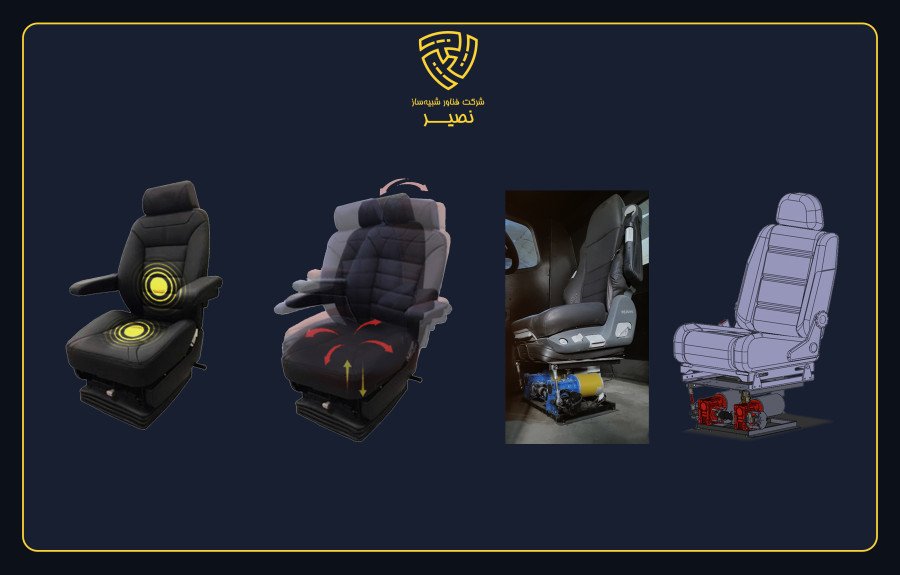
The Deputy Minister of Roads and Urban Development further stated that the Advanced Professional Driving Simulator Center has been operating since 2023 with the aim of supporting, designing, and developing a driving simulator platform tailored to intercity conditions and environments. This platform includes advanced software features, audio-visual systems, three-dimensional modeling, and three-axis vibration sensors for intercity bus and truck fleets. The project is supported by the Road Maintenance and Transportation Organization, the Vice Presidency for Science and Technology, the Headquarters for Advanced Transportation and Space Technologies, and Nasir Simulator Tech. Co.
Referring to the implementation of professional educational and skill-based scenarios grounded in advanced driving principles, Amani stated that the center has been visited multiple times by national authorities and international institutions, including the International Road Transport Union (IRU), whose representatives have praised its activities.
Explaining the implementation phases of the Nasir driving simulator center, he said that in the first phase, the initial product—including the simulator platform, intercity road design, and environmental symbols under various climatic and geographical conditions—was completed. Currently, diverse educational scenarios for assessing drivers’ professional competency and hazard perception have been implemented based on accident statistics from the past three years of the public transport fleet.
He also announced the construction of a second full-scale bus simulator, aimed at institutionalizing cost-effective and targeted technology-based training. He noted that live streaming of the final construction stages of the simulator is available via tc.rmto.ir. In addition, to facilitate access to designed training programs, the first mobile simulator unit, equipped with two simulators for public transport fleets and heavy road maintenance machinery, has been designed and will soon enter the construction and operational phases for professional training.
Amani described the Road Maintenance and Transportation Organization as a knowledge-based organization with a 2025 vision, expressing hope that the implementation of subsequent phases of this project and the establishment of skill assessment and practical testing hubs will represent a transformative step toward enhancing skills and increasing satisfaction across the transportation industry. This includes professional drivers, industry associations, and the effective use of their experience, as well as creating new international opportunities for professional drivers.
He further expressed optimism that, through cooperation with the Technical and Vocational Training Organization of Iran and the International Road Transport Union (IRU), there will be a significant improvement in the quality of practical testing services for professional driver competency and hazard perception—both for new and in-service drivers—ultimately contributing to reduced traffic accidents nationwide and the creation of new opportunities for professional drivers and the development of transit corridors.